Pallavi Srivastava: From Software Engineer to AI and Enterprise Transformation Leader
Every successful career has its defining turning points-moments when an unexpected opportunity opens the door to an entirely new future. For Pallavi Srivastava, that turning point came when a promising academic journey in bioinformatics led her into the world of software engineering, eventually shaping her into a global technology and program management leader.
Today, as Vice President of Program Management at VectorStack, Pallavi works at the intersection of artificial intelligence, enterprise transformation, and strategic governance. Her professional journey spans scientific research, global technology delivery, financial services, and executive leadership, demonstrating how technical expertise, when combined with strategic vision, can create meaningful organisational impact.
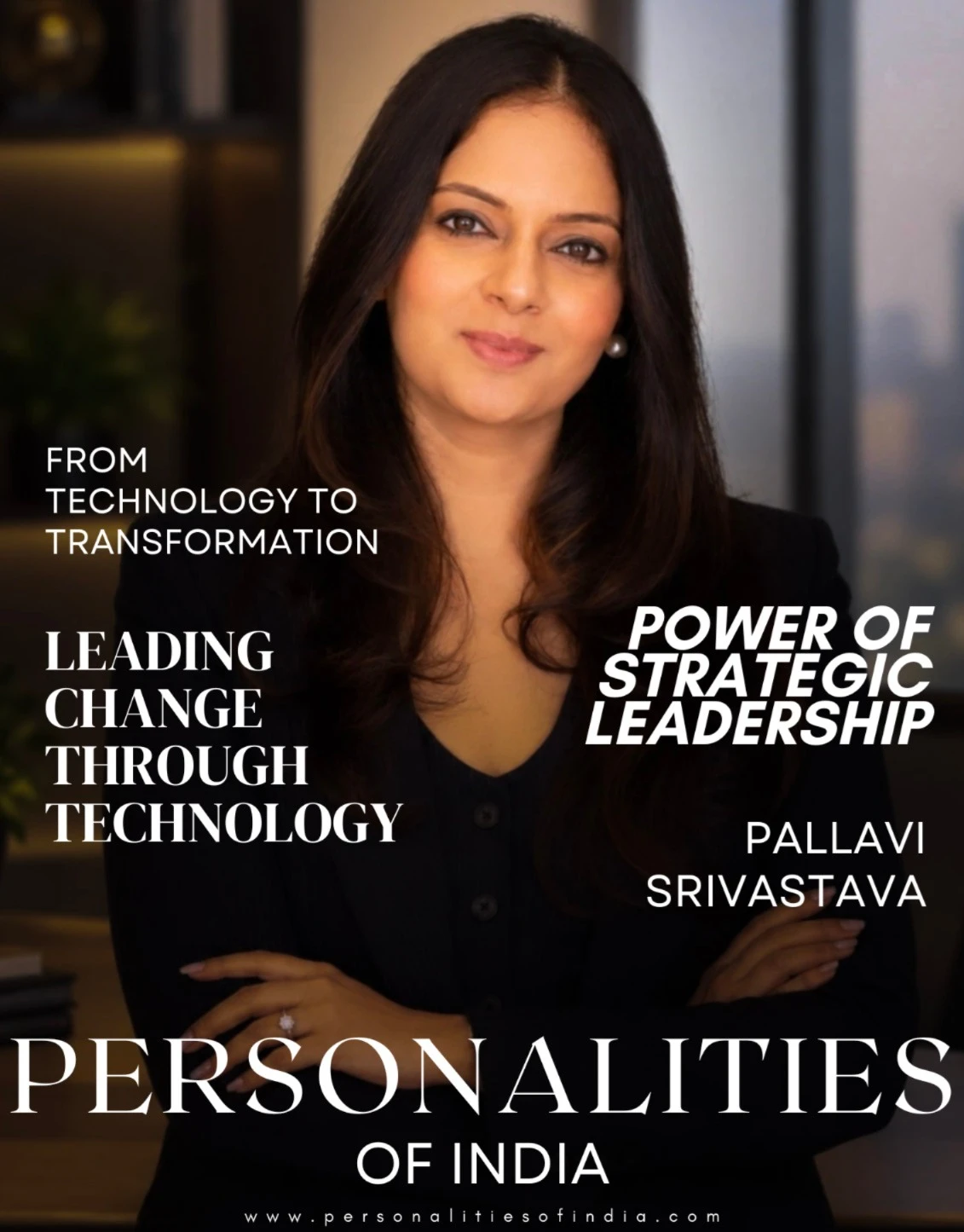
From Scientific Research to the World of Technology
Pallavi’s professional journey began in a field far removed from her current leadership responsibilities. While pursuing her B.Tech in Bioinformatics, she was deeply involved in computational vaccine design and research, preparing for a career centred on scientific exploration and innovation.
However, her career took an unexpected turn when she was selected through campus placement by HCL Technologies. This opportunity introduced her to software engineering and opened the door to an exciting career in the global technology industry.
What began as a transition from scientific research to software development gradually evolved into an international professional journey. Pallavi worked across Australia and the United States, collaborating with tier-one clients and leading global organisations, including Citibank, Deutsche Bank, Standard Chartered Bank, Microsoft, Merck, GE, GlobalLogic, and Sydney Trains.
Her work also involved engaging with stakeholders across the United States, Australia, France, Malaysia, and London. These experiences exposed her to diverse working cultures, complex business environments, and the challenges of delivering technology solutions across geographical boundaries.
Over time, Pallavi began to recognise that successful technology delivery depended on much more than technical expertise. Even the most promising solutions could encounter roadblocks when strategic alignment, cross-functional collaboration, governance, and risk management were not adequately addressed.
This realisation became the foundation of her transition from engineering into Program Management and enterprise transformation.
Discovering the Power of Strategic Leadership
Pallavi’s move into PMO governance and enterprise transformation represented a significant shift in her professional identity. She recognised that her strengths extended beyond technical execution to connecting business priorities, technology teams, and executive leadership.
Her focus gradually moved towards creating structures that could help complex programmes operate with greater clarity, accountability, and coordination.
Continuous learning played an important role in this evolution. Her Project Management Professional (PMP) certification, SAFe Agilist credential, and participation in the Leadership with AI programme at IIT Bombay strengthened her understanding of programme governance, agile practices, leadership, and emerging technologies.
These learning experiences supported her ability to lead multi-workstream transformation programmes, manage interconnected dependencies, and align execution with broader organisational objectives.
For Pallavi, leadership is not simply about ensuring that tasks are completed. It is about establishing the conditions in which teams can collaborate effectively, risks can be identified early, and business goals remain central to every decision.
Turning Complex Challenges into Structured Solutions
One of the most demanding phases of Pallavi’s leadership career involved taking responsibility for high-visibility enterprise programmes where multiple workstreams operated in silos. Conflicting priorities, cross-team dependencies, and strict regulatory requirements created challenges for coordination and timely execution.
Instead of treating these issues as isolated operational problems, she approached them through structured governance and transparent communication.
Pallavi established RAID governance mechanisms-covering Risks, Assumptions, Issues, and Dependencies- and introduced standardised stage-gate frameworks to improve oversight and accountability. Executive dashboards provided leadership teams with clearer visibility into programme progress, while defined escalation pathways helped address emerging concerns before they developed into larger obstacles.
By encouraging open communication between technology, compliance, and business leadership, she worked to break down functional silos and restore alignment across programme teams.
This approach reflected her belief that strong governance should enable progress rather than create unnecessary complexity. When teams understand their responsibilities, dependencies, and shared objectives, they are better positioned to make timely decisions and deliver outcomes consistently.
Building Trust at the Executive Level
Managing stakeholder expectations has been another defining aspect of Pallavi’s professional journey, particularly during major enterprise transformations, cross-functional AI adoption initiatives, and complex financial portfolio changes.
Such programmes frequently bring together technical teams focused on implementation and senior executives responsible for business performance, regulatory compliance, and strategic outcomes. Bridging the gap between these perspectives requires clarity, sound judgement, and an understanding of what matters most to each stakeholder group.
Pallavi addressed these challenges through active listening, data-driven decision-making, and disciplined programme management.
She focused on translating complex technical roadmaps into executive-level performance indicators, establishing standardised PMO frameworks, and ensuring that risks were escalated early. This helped leadership teams gain a clearer understanding of programme status, potential challenges, and the business implications of critical decisions.
Her commitment to transparent communication and delivery discipline earned her more than 50 executive appreciations within six months during a high-stakes enterprise assignment.
This recognition reflected the value of her approach to stakeholder alignment, risk governance, and programme execution. It also reinforced an important principle that has guided her career: trust is built when communication remains clear, accountability is visible, and commitments are supported by consistent action.
Leading the Next Phase of AI-Driven Transformation
As Vice President of Program Management at VectorStack, Pallavi has advanced into enterprise AI leadership, focusing on strategic execution roadmaps, governance frameworks, and responsible AI adoption.
Artificial intelligence is changing how organisations approach productivity, decision-making, operations, and innovation. Yet adopting new technologies at scale requires more than selecting the right tools. Organisations must also establish clear objectives, appropriate controls, measurable outcomes, and accountability across teams.
This is where Pallavi’s experience in enterprise governance and programme leadership becomes particularly relevant.
Her focus is on connecting emerging AI capabilities with business priorities while ensuring that implementation remains structured, responsible, and aligned with organisational goals. By bringing together technology, governance, and executive decision-making, she aims to help enterprises move beyond experimentation towards sustainable, measurable transformation.
Her earlier experience across global technology organisations and financial institutions provides a strong foundation for understanding the complexity of large-scale programmes, where innovation must operate alongside security, compliance, and operational discipline.
For Pallavi, the future of AI leadership lies not only in what technology can achieve but also in how effectively organisations integrate it into their strategies, processes, and cultures.
Recognition That Reflects Leadership and Impact
Pallavi’s contributions to programme leadership and organisational transformation have received recognition through several professional honours and industry features.
She was honoured with the Visionary Leader in People Strategy & Organizational Transformation Award 2026 at the Bharat 2.0 Conclave: Shakti Edition. The recognition highlighted her professional contribution to leadership and organisational transformation.
She also received the Economic Times Business Excellence Award for Excellence in Strategic Leadership and Business Transformation at the ET Business Excellence and Leadership Summit 2026.
These honours add to her professional milestones, reflecting her growing presence in the enterprise leadership space.
Her career has also been featured on the solo cover of Business Viewpoint Magazine, with a dedicated issue highlighting her professional trajectory, leadership evolution, and achievements in enterprise transformation.
During her tenure at Standard Chartered Bank, Pallavi successfully directed enterprise-wide PMO governance across complex portfolios. Her contributions to delivery standards, compliance, and cross-functional execution were recognised through the Partner in Excellence Award.
Together, these achievements represent different dimensions of her work-from managing intricate enterprise programmes to strengthening leadership alignment and supporting organisational change.
Looking Ahead: Connecting Technology with Business Vision
As Pallavi looks towards the next chapter of her career, her ambition remains centred on strategic enterprise transformation and responsible AI adoption.
Building on her experience in programme and portfolio leadership, she aims to lead high-impact, multi-workstream AI and digital transformation initiatives. Her focus is on establishing robust governance structures that translate emerging technologies into tangible business outcomes.
She also seeks to strengthen the connection between technical innovation and executive strategy, ensuring that AI initiatives are supported by clear priorities, effective oversight, and measurable performance indicators.
In an environment where organisations are increasingly investing in artificial intelligence and digital transformation, Pallavi’s approach highlights the importance of combining technological progress with disciplined execution.
Her journey from computational vaccine research to software engineering, international technology delivery, enterprise governance, and AI programme leadership—demonstrates that professional growth does not always follow a predetermined path. Sometimes, it emerges through the willingness to recognise new opportunities, acquire new capabilities, and redefine one's role in response to changing industry needs.
For Pallavi Srivastava, leadership is ultimately about bringing people, processes, and technology together to create outcomes that matter. As she continues to work at the forefront of enterprise transformation, her story offers an inspiring perspective on how technical foundations, strategic thinking, and a commitment to continuous learning can shape a career with global impact.